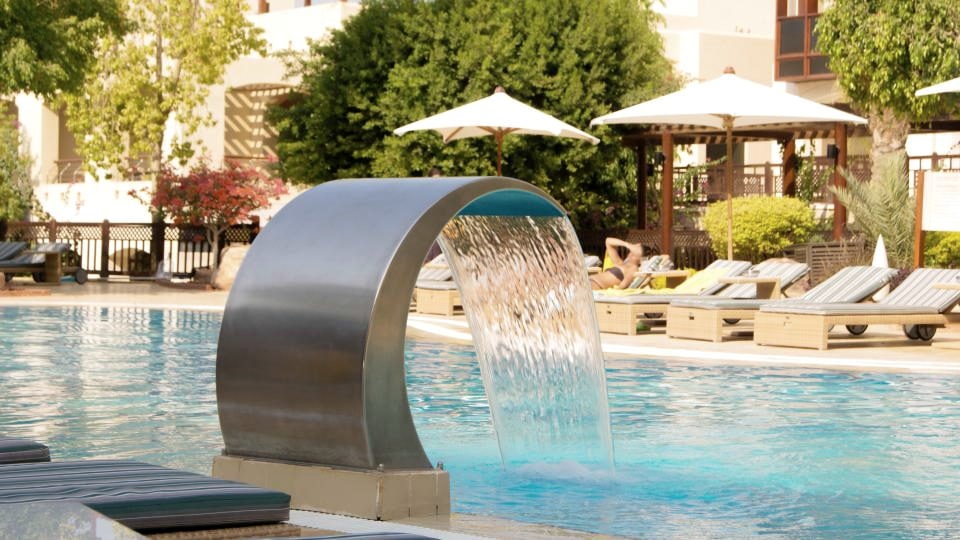
Hydrotherapy is the part of a wellness facility that runs continuously, which makes it the part where water treatment stops being an accessory and becomes the design.
We plan the plant room with the pool: turnover rates, dosing, monitoring and the access needed to service any of it without closing the facility.
Plant planning
- Turnover
- Sized to bather load, not volume alone
- Treatment
- Sediment, carbon, softening, dosing
- Monitoring
- Inline ORP and pH with alarm output
- Plant access
- 800 mm working space in front of the skid
- Drainage
- Floor gulley for backwash and regeneration
What actually decides it
- 01
Test the supply before specifying
Treatment is specified from a water test, not from a catalogue. Two hotels a kilometre apart can need different skids.
- 02
Serviceable beats clever
Anything that cannot be maintained without draining the pool will eventually not be maintained.
- 03
Log the water
Facilities that record ORP and pH daily have far fewer failures, because problems show up as a trend rather than a closure.
Questions
- What water treatment does a spa pool need in Nepal?
- Sediment filtration, activated carbon, softening and controlled dosing as a minimum. The exact configuration comes from a test of your supply.
- How often do cartridges need changing?
- Quarterly on typical valley supply, more often in the monsoon. Salt for the softener is usually monthly.
- Can you retrofit treatment to an existing pool?
- Usually yes, if there is plant space and a gulley. It is one of the highest-value retrofits we do.
Tell us the room.
Dimensions, the supply you have, and what you want to happen in it. We will come back with a system list and an indicative budget.